Texts in This Category
Divine Comedy
Dante's Journey Through Hell, Purgatory, Paradise
Dante's 100-canto masterpiece (1308-1320) journeying through Inferno's nine circles, Purgatorio, Paradiso—most elaborate Christian cosmology, influenced by Apocalypse of Paul
Divine Comedy — Full Summary & Context →The Golden Legend
Lives of the Saints
Jacobus de Voragine's compilation (1260) of saints' lives and martyrdoms, basis for medieval iconography, legendary rather than historical, enormously popular
The Golden Legend — Full Summary & Context →Revelations of Divine Love
Julian of Norwich
First book by woman in English (1395), Julian's 16 'showings' emphasizing God's maternal love, 'all shall be well,' mystical optimism amid plague and war
Revelations of Divine Love — Full Summary & Context →The Imitation of Christ
Thomas à Kempis
Medieval devotional classic (c. 1418-1427), second only to Bible in Christian book sales, monastic spirituality for laypeople, self-denial and Christ-centered life
The Imitation of Christ — Full Summary & Context →Summa Theologica
Thomas Aquinas
Aquinas's unfinished masterpiece (1265-1274) systematizing Christian theology through Aristotelian logic—God's existence, human nature, virtue, sacraments—foundational to Catholic doctrine
Summa Theologica — Full Summary & Context →The Cloud of Unknowing
Anonymous English Mysticism
Anonymous 14th-century English mystic instructs a young contemplative to abandon intellectual knowledge and pierce the 'cloud of unknowing' between man and God through naked love alone
The Cloud of Unknowing — Full Summary & Context →📖 Read FREE on Kindle Unlimited
All editions below are included with your KU subscription at no extra cost.
1 Enoch: The Book of Watchers: A Modern English Translation with Historical Context and Inline Explainers
A Modern English Translation with Historical Context and Inline Explainers
Read FREE on Kindle Unlimited →
Advent with Aquinas: Twenty-Five Days with the Church's Clearest Thinker, in Plain Modern English - Large Print
Read FREE on Kindle Unlimited →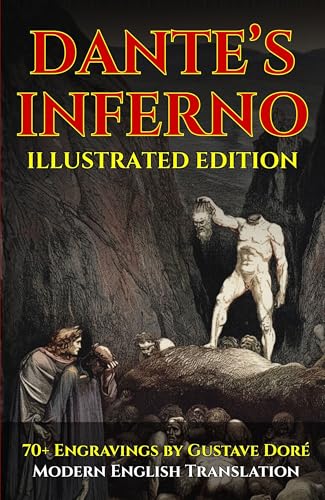
Dante’s Inferno — Fully Illustrated Edition: Modern English Translation with 70+ Gustave Doré Engravings and Historical Commentary
Modern English Translation with 70+ Gustave Doré Engravings
Read FREE on Kindle Unlimited →
Dialogue of the Savior: The Complete Text in Modern English, with a Short Course and Inline Explainers
Read FREE on Kindle Unlimited →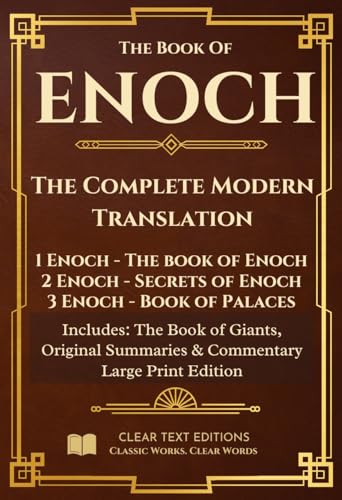
Enoch: The Complete Modern Translation: 1 Enoch, 2 Enoch, 3 Enoch, Book of Giants: Large Print, Biblical/Historical Commentary and Summaries
1 Enoch, 2 Enoch, 3 Enoch, Book of Giants
Read FREE on Kindle Unlimited →