Texts in This Category
95 Theses
Disputation on the Power of Indulgences
Martin Luther's 1517 challenge to indulgences and papal authority, nailed to Wittenberg church door, sparked Protestant Reformation, spread via printing press
95 Theses — Full Summary & Context →Institutes of the Christian Religion
John Calvin
Calvin's systematic theology (1536, expanded to 1559), foundational Reformed doctrine—predestination, total depravity, God's sovereignty, shaped Puritanism and Presbyterian churches worldwide
Institutes of the Christian Religion — Full Summary & Context →The Pilgrim's Progress
From This World to That Which Is to Come
John Bunyan's allegorical masterpiece (1678), written in Bedford jail, Christian's journey from City of Destruction to Celestial City, best-selling Christian book after Bible
The Pilgrim's Progress — Full Summary & Context →Sinners in the Hands of an Angry God
Jonathan Edwards' Fire Sermon
Most famous American sermon (1741), Edwards' terrifying imagery of God holding sinners like spiders over hellfire, catalyzed First Great Awakening revival
Sinners in the Hands of an Angry God — Full Summary & Context →The Method of Grace
George Whitefield
Whitefield's Great Awakening sermon emphasizing experiential conversion over ritual religion, evangelical preaching to masses, cross-denominational revival
The Method of Grace — Full Summary & Context →A Plain Account of Christian Perfection
John Wesley
Wesley's 1766 defense of entire sanctification—the doctrine that Christians can be perfected in love in this life—foundational to Methodist theology and the Holiness movement
A Plain Account of Christian Perfection — Full Summary & Context →Book of Concord
Lutheran Confessional Documents
1580 compilation of ten Lutheran confessional documents including the Augsburg Confession, Luther's Catechisms, and the Formula of Concord—defining doctrinal standard for Lutheran churches worldwide
Book of Concord — Full Summary & Context →Heidelberg Catechism
Reformed Confession of Faith
1563 Reformed catechism in 129 questions and answers, opens with the famous 'What is your only comfort in life and death?'—warmest and most devotional of the Reformed confessions
Heidelberg Catechism — Full Summary & Context →The Religious Affections
Jonathan Edwards
Edwards' 1746 masterwork distinguishing genuine from counterfeit religious experience—true conversion produces holy affections and transformed character, not merely emotional excitement
The Religious Affections — Full Summary & Context →Westminster Confession of Faith
Presbyterian Doctrinal Standard
1646 Calvinist confession produced by the Westminster Assembly—Scripture's authority, covenant theology, predestination, and church government—defining standard for Presbyterian churches worldwide
Westminster Confession of Faith — Full Summary & Context →📖 Read FREE on Kindle Unlimited
All editions below are included with your KU subscription at no extra cost.
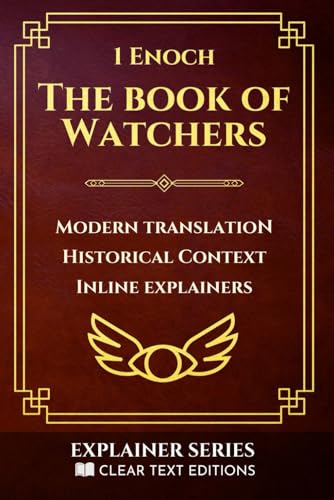
1 Enoch: The Book of Watchers: A Modern English Translation with Historical Context and Inline Explainers
A Modern English Translation with Historical Context and Inline Explainers
Read FREE on Kindle Unlimited →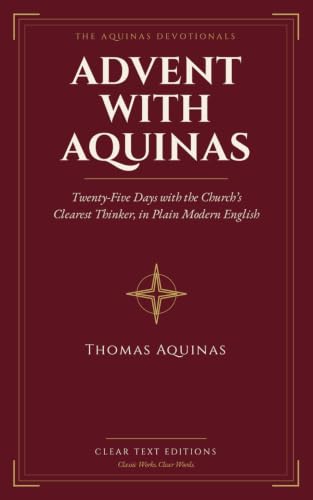
Advent with Aquinas: Twenty-Five Days with the Church's Clearest Thinker, in Plain Modern English - Large Print
Read FREE on Kindle Unlimited →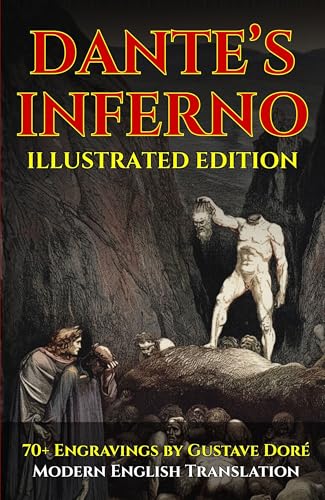
Dante’s Inferno — Fully Illustrated Edition: Modern English Translation with 70+ Gustave Doré Engravings and Historical Commentary
Modern English Translation with 70+ Gustave Doré Engravings
Read FREE on Kindle Unlimited →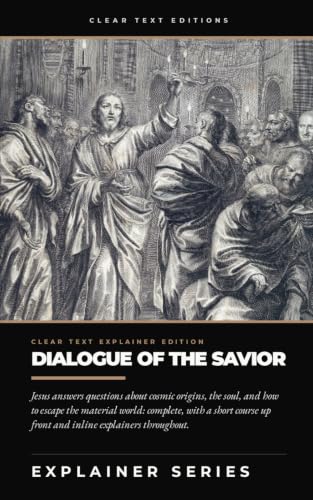
Dialogue of the Savior: The Complete Text in Modern English, with a Short Course and Inline Explainers
Read FREE on Kindle Unlimited →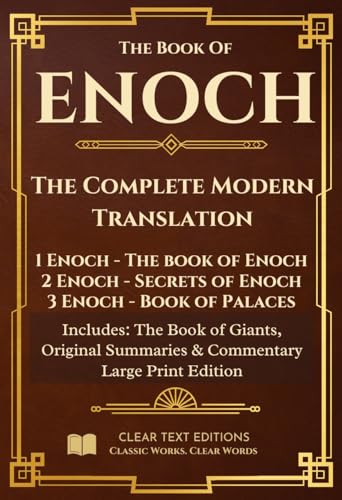
Enoch: The Complete Modern Translation: 1 Enoch, 2 Enoch, 3 Enoch, Book of Giants: Large Print, Biblical/Historical Commentary and Summaries
1 Enoch, 2 Enoch, 3 Enoch, Book of Giants
Read FREE on Kindle Unlimited →